
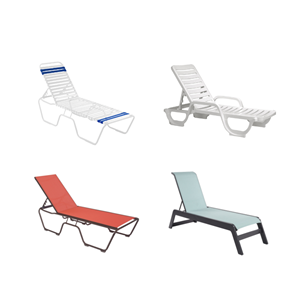
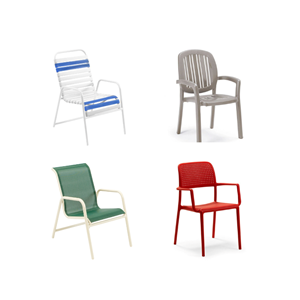
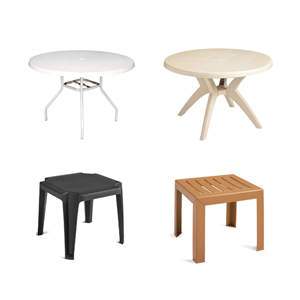
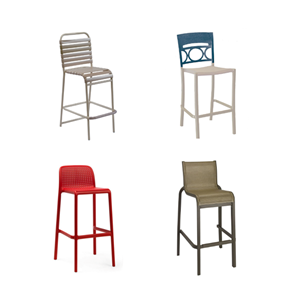
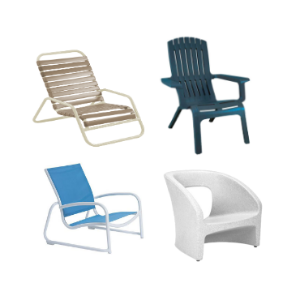
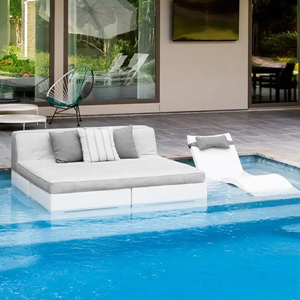
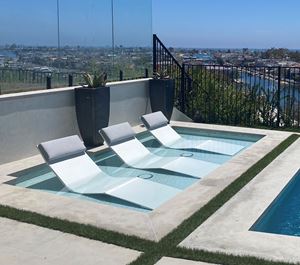
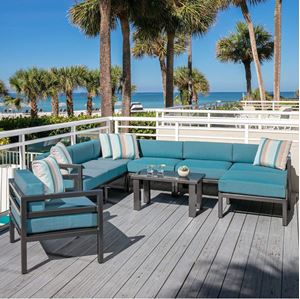


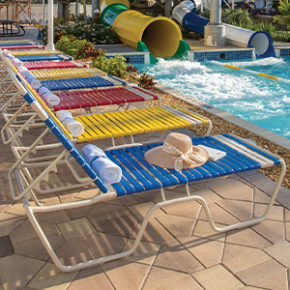
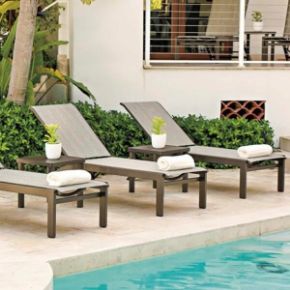
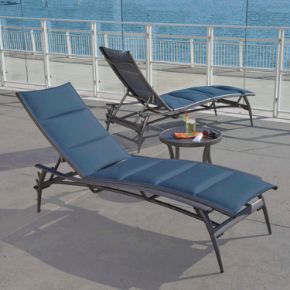
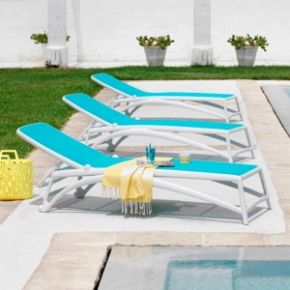
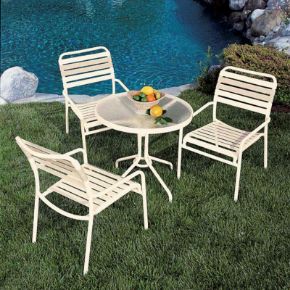
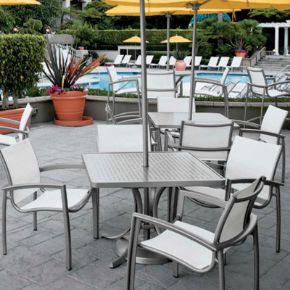
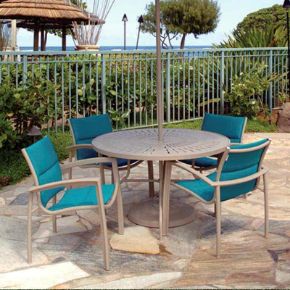
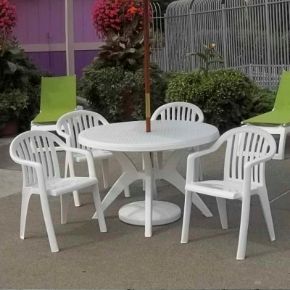
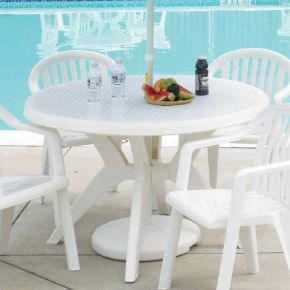
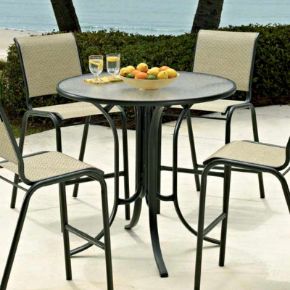
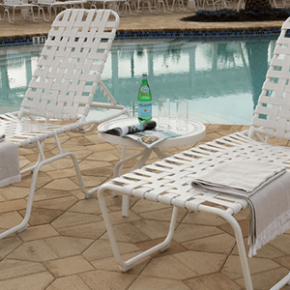
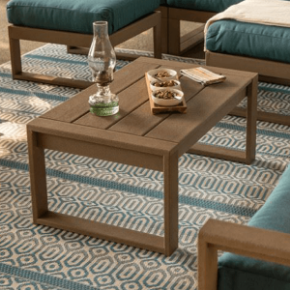
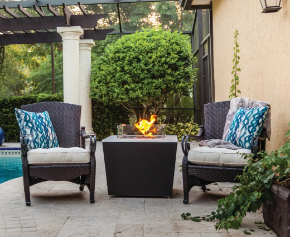
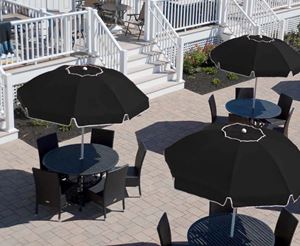
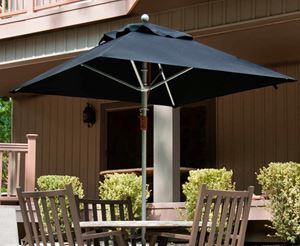
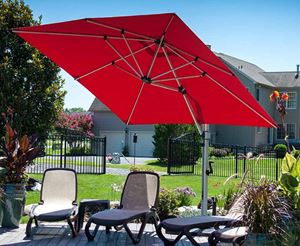
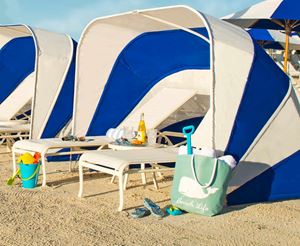
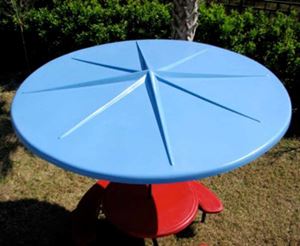
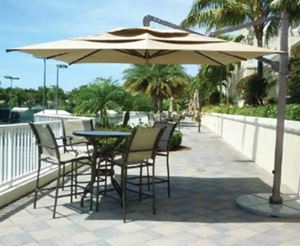
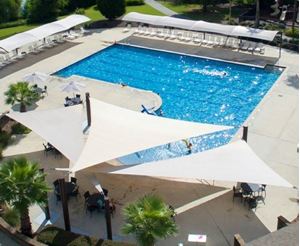






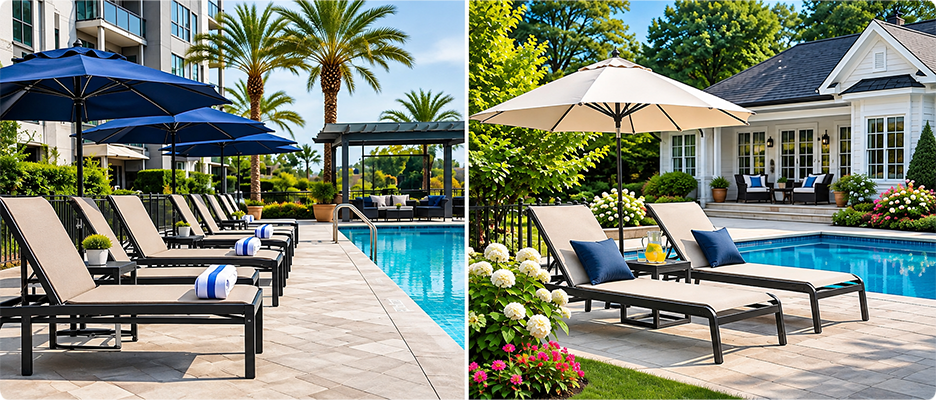
Outdoor furniture at a busy hotel, resort, apartment community, or HOA pool experiences demands that go well beyond those of a typical backyard patio. Frequent guest use, regular repositioning, exposure to the elements, and routine cleaning make furniture selection an important operational decision.
Commercial-grade outdoor furniture is designed with these shared environments in mind. From purpose-built frames and durable seating materials to coordinated collections and potential replacement-part options, commercial furnishings can provide practical advantages that residential furniture may not offer.
Choosing commercial furniture is about more than appearance or initial cost. It is about investing in seating, tables, and shade products that support guest comfort, facility maintenance, and the property's long-term needs.
This guide explores the advantages of commercial-grade furniture, the materials and construction features that matter, and how to select the right products for pool decks, patios, outdoor dining areas, and other shared spaces.
What Makes Commercial Outdoor Furniture Different?
The biggest difference between commercial and residential outdoor furniture is how and where it is intended to be used.
Residential furniture is generally designed for private household environments, while commercial furniture is selected for shared spaces where different guests, residents, and visitors may use the same pieces throughout the day.
That difference influences construction, materials, maintenance, and purchasing priorities. Hotels, resorts, HOAs, and apartment communities need furniture that supports daily operations while maintaining a comfortable and attractive outdoor environment.
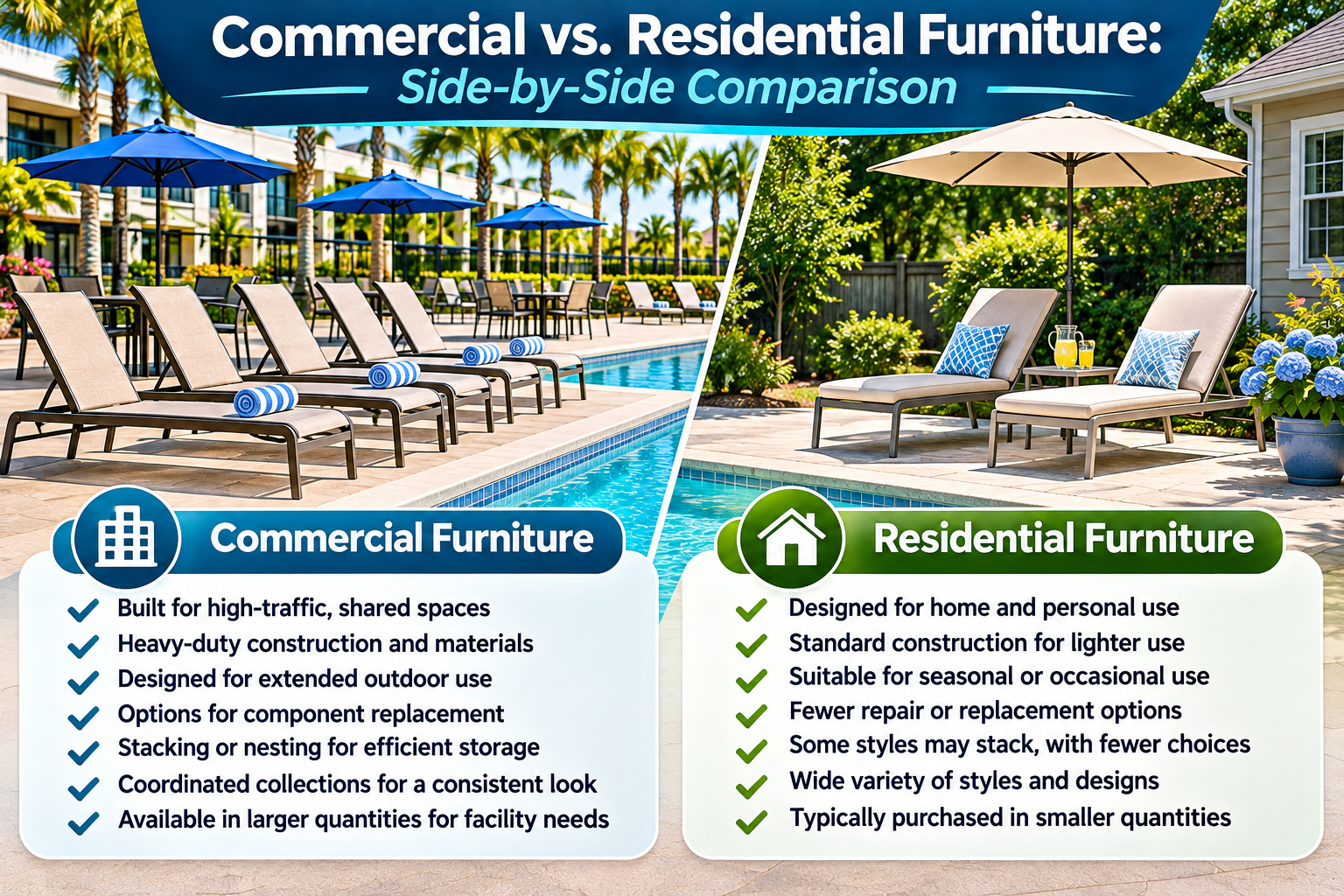
Commercial vs. Residential Furniture: Side-by-Side Comparison
| Feature | Commercial-Grade Advantage | Residential Consideration |
|---|---|---|
| Intended use | Products selected for frequent use in shared environments | Generally intended for household use |
| Construction | Commercial-oriented designs can accommodate repeated handling and facility demands | May not be intended for the same use conditions |
| Materials | Options selected for outdoor exposure and ongoing maintenance | Suitability varies by product |
| Repairs | Some commercial collections support replacement straps, slings, and components | Replacement options may be limited |
| Warranty | Commercial-use coverage may be available | Household warranties may exclude commercial applications |
| Coordinated collections | Matching chairs, lounges, and tables can support consistent property design | Matching options may change with retail assortments |
| Purchasing | Options for furnishing multiple areas and coordinating larger orders | Typically oriented toward individual household purchases |
| Long-term value | Repairability and appropriate construction can help manage ownership costs | Initial price may not reflect commercial maintenance needs |
Commercial-grade furniture offers a practical starting point for facilities that need furnishings suited to shared use, regular maintenance, and coordinated purchasing.
How Commercial-Grade Construction Adds Value
One of the strongest reasons to consider commercial outdoor furniture is its construction. Commercial-oriented products may incorporate reinforced frame designs, purpose-built connections, replaceable seating surfaces, and finishes selected for outdoor exposure.
These features can provide meaningful advantages in settings where furniture is used and moved frequently.
Built for Shared-Use Environments
A chair on a residential patio may be used by the same household members for occasional gatherings. At a resort pool, the same chair may be occupied by different guests, repositioned throughout the day, and cleaned by staff.
Furniture intended for these conditions can help facilities better address repeated use and handling. Frame design, joint construction, fasteners, and seating attachments all contribute to how a product functions.
A useful comparison considers the complete construction rather than relying on furniture weight or appearance alone.
Recognized Performance Standards
Some furniture categories have recognized testing standards that distinguish residential and nonresidential applications.
For example, ASTM F1988 establishes separate Class A (residential) and Class B (nonresidential) performance requirements for certain plastic outdoor chaise lounges. Its scope includes weathering, impact, static loading, and arm testing.
Although this standard does not apply to every outdoor furniture product, it demonstrates how performance requirements can differ according to intended use. For commercial buyers, documented performance information can provide additional confidence when comparing products.
Serviceable Components and Repairs
Another potential advantage of commercial furniture is the ability to replace worn or damaged components. Depending on the model, this may include vinyl straps, sling seating surfaces, cushions, glides, or selected hardware.
For example, a commercial chaise lounge with a replaceable sling may allow a property to renew the seating surface while retaining a frame that remains in suitable condition. This can be particularly valuable when maintaining larger quantities of matching furniture.
Serviceability should be considered alongside frame construction and material selection because it can influence the cost and practicality of future repairs.
Choosing Materials for Commercial Outdoor Furniture
Material selection plays an important role in how outdoor furniture performs and how easily it can be maintained. Commercial furniture is available in a variety of materials and seating styles, allowing properties to select furnishings that suit their environment, design preferences, and operational needs.
Aluminum Frames
Aluminum is widely used for commercial chaise lounges, patio chairs, and dining tables because it combines relatively low weight with useful corrosion resistance. Its lighter weight can make furniture easier for guests and staff to reposition, depending on the product's construction.
Unlike ordinary steel, aluminum does not form iron rust. However, protective finishes, hardware, and connections still require appropriate care.
In coastal environments, contact between dissimilar metals in the presence of moisture or salt can contribute to galvanic corrosion. The American Galvanizers Association explains how dissimilar metals and environmental exposure affect corrosion.
For commercial properties, selecting appropriate finishes and maintaining frame connections can help protect the furniture's appearance and condition.
Plastic Resin and Polymer Furniture
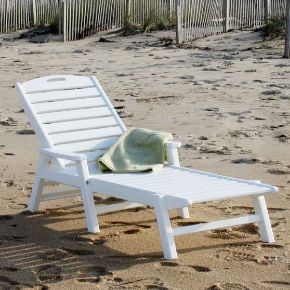
Molded resin and polymer furniture can be practical for poolside seating and outdoor tables, particularly where cleaning convenience and handling are priorities.
Commercial-oriented resin products are available in various constructions and styles, giving facilities options for different seating and storage needs.
A molded resin chair may be easier to handle than a substantial polymer chair built with multiple components, although actual product weight and construction vary. Consider how the furniture will be used, cleaned, repositioned, and stored.
Recycled Plastic Furniture
Recycled plastic offers an alternative to traditional wood furniture and is available in a variety of outdoor seating and table designs.
Depending on the product, these furnishings may incorporate reinforcing structures and hardware to support the overall design. Recycled plastic can be worth considering for properties seeking substantial outdoor furniture with a wood-inspired appearance.
Frame construction, product weight, and handling requirements should still be evaluated for the intended application.
Vinyl Strap and Sling Seating
Vinyl strap and sling are popular seating options for commercial pools and patios.
Vinyl strap furniture uses flexible straps attached to the frame. Designs may use parallel straps or cross-woven arrangements, depending on the product.
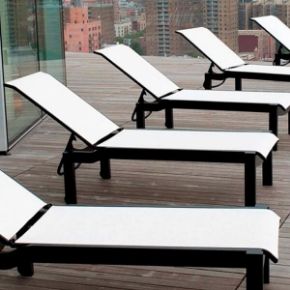
Sling furniture uses tensioned fabric to form the seat and back. Padded sling incorporates additional cushioning for a different seating experience.
Both styles offer commercial buyers options for balancing comfort, appearance, cleaning, and serviceability. For facilities maintaining larger seating inventories, the ability to replace worn seating materials on eligible models can be particularly useful.
For a more detailed breakdown of longevity, comfort, maintenance, cost, and appearance, explore our Vinyl Strap vs. Sling Chaise Lounges comparison.
Synthetic Wicker and Cushioned Seating
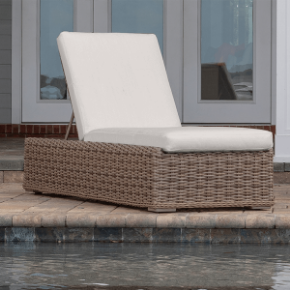
Synthetic wicker and cushioned outdoor furniture can create comfortable conversation areas and resort-style lounges. Commercial-oriented collections allow properties to incorporate softer seating and a more furnished appearance into shared outdoor spaces.
These products introduce additional considerations, including weave construction, cushion materials, moisture exposure, and fabric care. For uncovered spaces, plan how cushions and other soft furnishings will be handled during heavy rain or extended closures.
Commercial Outdoor Furniture Materials at a Glance
| Material or Style | Advantages for Commercial Settings | What to Consider |
|---|---|---|
| Aluminum | Relatively lightweight, versatile frame designs | Finish and connection care |
| Molded resin | Cleaning convenience, various molded designs | Construction and support |
| Polymer | Substantial construction options, varied finishes | Product weight and handling |
| Recycled plastic | Alternative to traditional wood, varied designs | Weight and reinforcement |
| Vinyl strap | Flexible seating, potential strap replacement | Strap condition and attachments |
| Sling | Tensioned seating, variety of fabric options | Fabric care and replacement |
| Padded sling | Added cushioning | Moisture and drying |
| Synthetic wicker | Woven appearance, lounge styling | Weave construction and care |
| Cushioned seating | Additional comfort and design flexibility | Fabric care and storage |
Matching Commercial Furniture to Different Outdoor Spaces
Commercial furniture allows facilities to select seating, tables, and shade products according to how each outdoor area will be used. A well-planned property may combine chaise lounges, upright chairs, dining tables, umbrellas, and conversation seating to accommodate different activities.
Pool Decks and Chaise Lounging Areas
Chaise lounges are central to many hotel, resort, and community pool layouts.
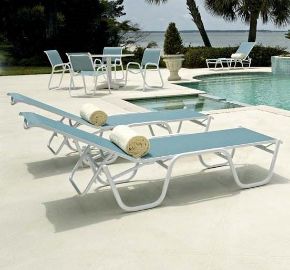
Commercial chaise lounges are available with different reclining mechanisms, frame materials, seating surfaces, and handling features. These options allow facilities to prioritize guest comfort while considering cleaning and daily furniture movement.
Some models also offer stacking or nesting capabilities that can simplify storage and seasonal preparation.
For facilities with multiple seating zones, a combination of chaise lounges, upright chairs, and side tables can accommodate different guest activities.
Furniture selection should also account for the available deck space. Chaise lounges, upright chairs, side tables, umbrellas, and walkways all compete for room, making layout planning just as important as choosing individual products.
Thoughtful placement can help create comfortable seating zones while preserving practical circulation and access around the pool.
For additional planning considerations, read How Space Planning Is Used to Create the Best Use of Pool Decks.
Hotels, Resorts, and Community Amenities
Commercial properties often use different furniture styles throughout their outdoor spaces.
A resort may feature chaise lounges beside the pool, cushioned seating in conversation areas, and dining tables on a nearby terrace. Apartment communities and HOAs may offer similar arrangements on a smaller scale.
Commercial furniture collections can make it easier to coordinate finishes, colors, and seating styles across these different areas. This creates opportunities for a consistent appearance while allowing each space to serve its intended purpose.
Commercial Outdoor Dining Areas
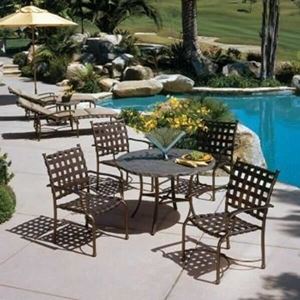
Commercial outdoor dining furniture deserves special attention because chairs and tables must work together. Dining collections offer facilities options for coordinating seating and tables, but practical dimensions remain important when selecting individual products.
- Tabletop shape and size: Round tables can support conversation among diners, while rectangular tables may suit longer arrangements. Actual seating capacity depends on chair dimensions and the surrounding layout.
- Table bases: Pedestal and four-leg designs affect where guests can position their feet and chairs. Base configuration can be as important as tabletop dimensions.
- Chair and table fit: Compare seat height, armrest height, and table underside clearance. Chairs with arms may not slide beneath tables with low aprons.
- Armed and armless chairs: Armless seating can eliminate the restriction of sitting between armrests, but it does not necessarily offer a wider seat. Compare usable seat dimensions.
- Storage: If dining areas are rearranged for events, furniture weight and verified stacking or folding features can affect staff handling.
- Umbrellas: Tables with umbrella openings still require an appropriate support arrangement. Table compatibility and umbrella base requirements should be considered together.
Don't Overlook Accessibility
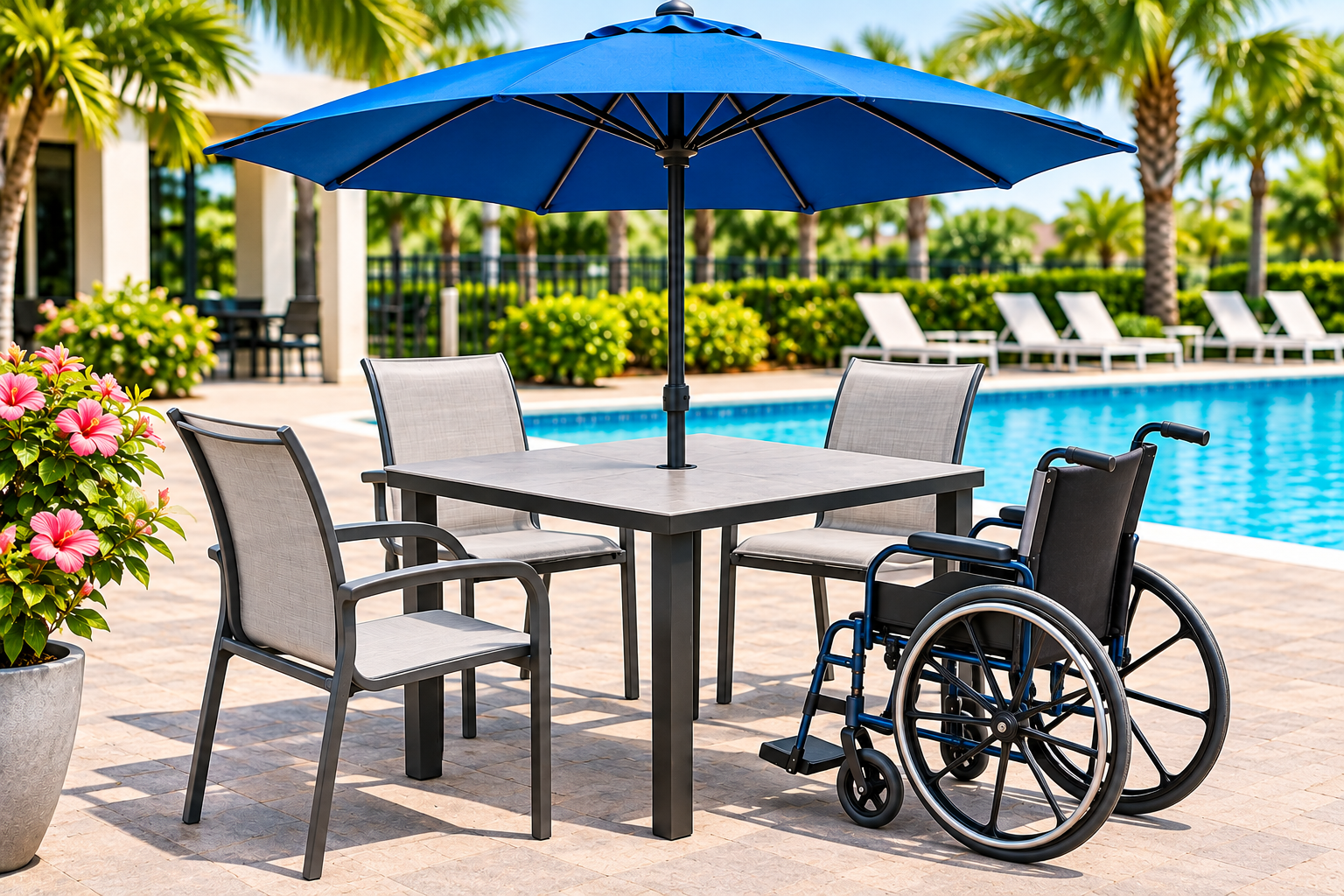
Accessible dining requires more than removing a chair from the table.
Under the U.S. Access Board's ADA Standards for dining surfaces, covered accessible dining surfaces must generally have tops 28–34 inches above the finished floor or ground, with appropriate clear floor space and knee and toe clearance.
These requirements apply where the ADA Standards require accessible dining surfaces; they should not be interpreted as a universal specification for every table.
For properties planning new dining areas or replacing fixed furnishings, accessibility should be considered alongside table dimensions, chair placement, and circulation routes.
Explore commercial pool deck and patio dining tables to compare available table styles.
Commercial Furniture Makes Maintenance More Manageable
One of the practical benefits of selecting furniture intended for commercial use is the opportunity to choose products with maintenance and serviceability in mind. Hotels, resorts, HOAs, and apartment communities need furnishings that can be cleaned, inspected, and maintained as part of routine property operations.
Cleaning and Disinfecting Are Different Tasks
Routine cleaning removes dirt and organic material. Disinfecting involves using products intended to kill specified microorganisms.
The EPA explains the difference between cleaning, sanitizing, and disinfecting and emphasizes following disinfectant label instructions.
For furniture, cleaning products must also be compatible with the seating materials and finishes. A disinfectant suitable for a hard surface is not automatically appropriate for every sling fabric, cushion, or protective coating.
For example, vinyl strap furniture benefits from cleaning methods that address dirt, body oils, and poolside residue without unnecessarily damaging the seating material.
For step-by-step care instructions, see How to Clean Vinyl Strap Pool Deck and Patio Furniture.
Repair or Replace?
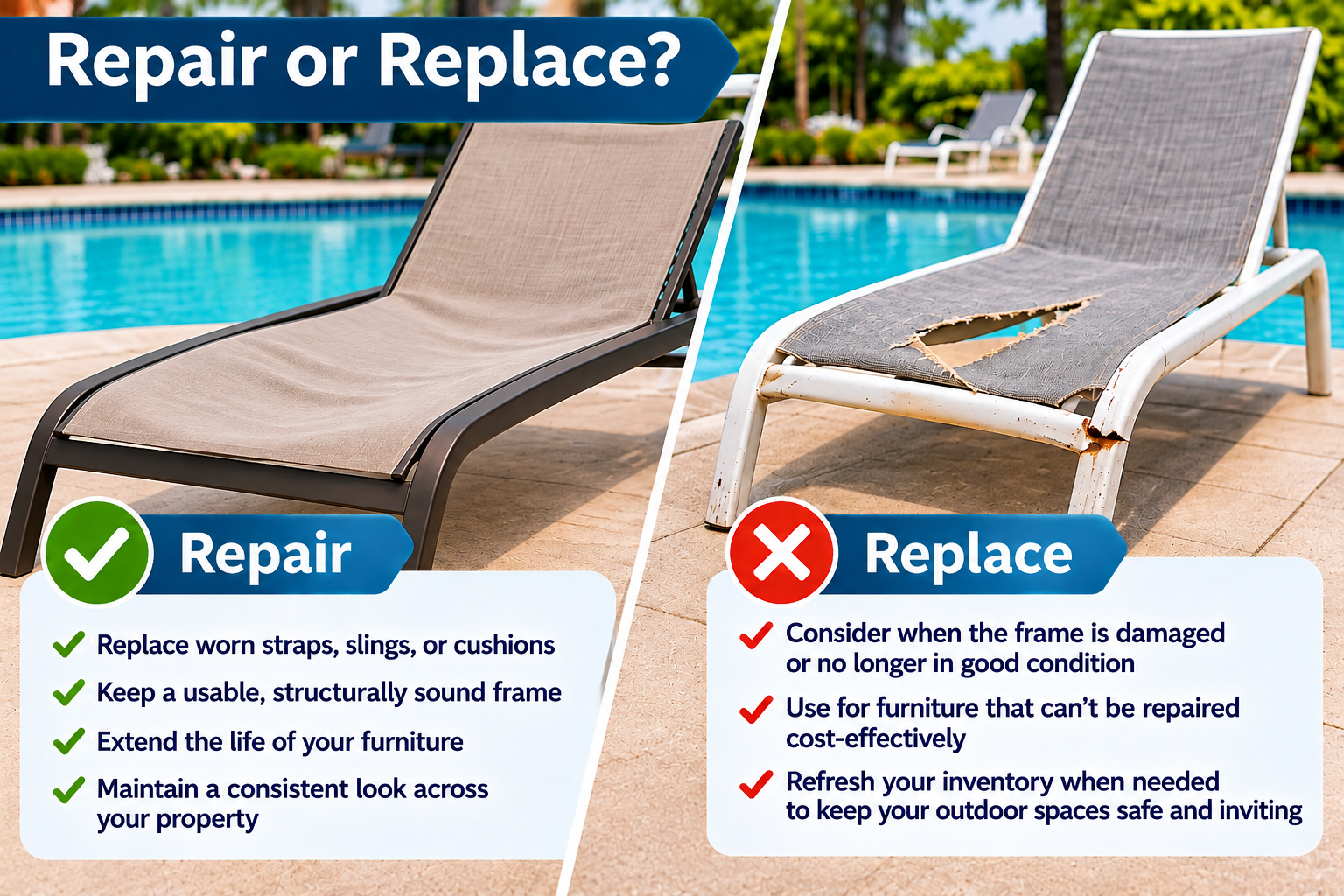
Another advantage of certain commercial furniture designs is the opportunity to refurbish damaged or worn components rather than replace an entire piece.
For example, eligible vinyl strap and sling chairs can be restored with new seating materials when their frames remain in suitable condition. Depending on the product, refinishing a frame or replacing worn components may also be an option.
Refurbishing can help facilities extend the usefulness of existing furniture and maintain a coordinated appearance without automatically purchasing complete replacements.
The condition of the frame, repair costs, and availability of compatible components should guide the decision.
Before discarding damaged chairs or chaise lounges, explore Damaged Pool Furniture? Don't Throw It Out—Consider Refurbishing It Instead for a closer look at restoration possibilities.
Why Commercial Furniture Can Be a Better Long-Term Investment
Commercial outdoor furniture should be evaluated as an investment in the property's daily operation, not simply as an individual purchase.
Although commercial-grade products may have higher initial prices than some residential alternatives, their construction, intended application, and potential serviceability can provide value over time.
For facilities purchasing larger quantities, the ability to maintain or repair furniture can be particularly important.
Consider a community pool purchasing 40 chairs. Comparing two quotes should involve more than multiplying the chair price by 40.
| Cost Category | What to Include |
|---|---|
| Purchase | Furniture, finishes, and selected options |
| Delivery | Freight, unloading, and receiving arrangements |
| Assembly | Required labor and installation |
| Maintenance | Cleaning supplies, inspections, and staff time |
| Repairs | Parts and labor |
| Storage | Space and handling requirements |
| Replacement | Future furniture purchases and matching inventory |
A useful comparison considers the total expense over the period the property expects to use the furniture.
Initial purchase + delivery and setup + maintenance + repairs + storage + replacements − residual value, if any.
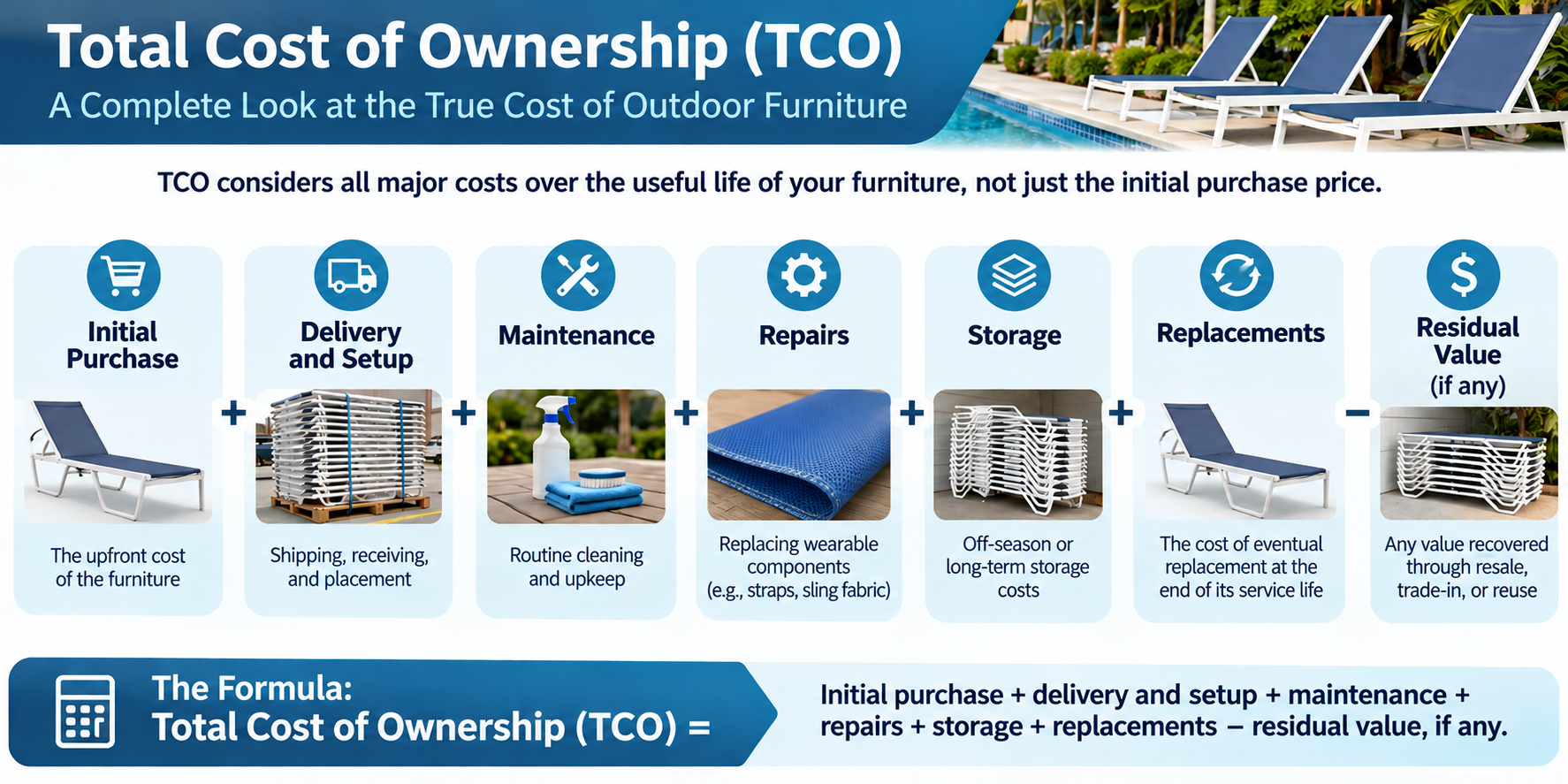
For example, a commercial chair with a replaceable seating surface may allow a facility to address wear without replacing the entire chair. Similarly, coordinated commercial collections can help properties plan matching seating and table arrangements across multiple areas.
Actual savings depend on the selected products, their service life, and the property’s maintenance practices.
Planning Delivery, Assembly, and Storage
Commercial furniture purchasing often involves larger quantities and additional coordination.
Properties may need to plan freight deliveries, unloading, assembly, and temporary storage before the furniture can be placed into service.
Before ordering, determine whether the property has appropriate truck access, unloading arrangements, and space to inspect the shipment.
Large orders may also need to be coordinated with renovation schedules, seasonal openings, or property maintenance projects.
Assembly requirements vary by product. Some pieces arrive assembled, while others require on-site work.
Storage deserves attention as well. Furniture that stacks or nests may require less floor space than pieces that must be stored individually, but the exact configuration matters.
Commercial Outdoor Furniture Buying Checklist
Before finalizing a purchase, compare the following details:
Facility and Construction
- Application: Property type, expected use, and exposure conditions.
- Construction: Frame design, seating attachments, and product stability.
- Materials: Cleaning requirements, finish care, and environmental suitability.
Guest Comfort and Layout
- Comfort: Seating dimensions, armrests, reclining features, and guest needs.
- Layout: Furniture footprint, table compatibility, and circulation.
- Accessibility: Applicable requirements for dining surfaces and accessible routes.
Care and Storage
- Maintenance: Cleaning procedures and repair options.
- Storage: Furniture handling, stacking, and seasonal storage.
Ordering and Ownership
- Warranty: Commercial-use eligibility, coverage, and exclusions.
- Purchasing: Quantity, freight, assembly, and total ownership costs.
Having these details ready makes it easier to compare products and request accurate quotes.
Frequently Asked Questions
Why Choose Commercial-Grade Furniture Over Residential Furniture?
Commercial-grade furniture is intended for shared environments where frequent use, cleaning, handling, and long-term maintenance are important considerations. Purpose-built construction and serviceable components can offer advantages for hotels, resorts, HOAs, and other commercial facilities.
Is Commercial Outdoor Furniture More Durable?
Commercial-oriented products may incorporate construction features and materials selected for demanding shared-use environments. Actual durability depends on the individual product, its exposure conditions, and maintenance.
Is Commercial Furniture Worth the Additional Cost?
Commercial furniture can provide long-term value through appropriate construction, maintenance options, and potential repairability. Buyers should compare total ownership costs rather than purchase price alone.
Can Commercial Outdoor Furniture Be Refurbished?
Some commercial furniture models have replaceable vinyl straps, slings, cushions, hardware, or other components. Refurbishment depends on frame condition and the availability of suitable replacement parts.
Does Commercial Outdoor Furniture Require Special Maintenance?
Maintenance requirements vary by material and finish. Routine cleaning, inspections, and appropriate storage can help facilities maintain their furniture and address wear before it becomes a larger issue.
Invest in Furniture Designed for Commercial Spaces
Commercial outdoor furniture is more than a design choice. It is an investment in the comfort, appearance, and daily operation of your property.
From poolside chaise lounges and patio seating to outdoor dining tables and umbrellas, choosing furniture intended for commercial use helps facilities address frequent use, ongoing maintenance, and the practical demands of shared environments.
By prioritizing appropriate construction, materials, serviceable components, and coordinated furniture collections, hotels, resorts, HOAs, and apartment communities can make purchasing decisions that support their properties for years to come.
Explore commercial outdoor furniture options suited to your facility.
Shop Commercial Pool FurnitureChaise LoungesPatio SeatingDining Tables
Leave your comment