



When it comes to commercial outdoor areas, umbrellas are essential components for creating a comfortable and protective environment for guests, customers and employees. But with different types and styles of commercial umbrellas to choose from, how do you know which is right for your space and needs?
At Pool Furniture Supply, we’re here to break down the three main types of commercial umbrellas on the market, explain how they function, and provide the ideal applications for each. Armed with the facts, you’ll have the knowledge and confidence to order the best-suited umbrellas for your outdoor space.
FACTORS TO CONSIDER WHEN SHOPPING FOR UMBRELLAS
While some umbrellas can serve multiple applications, not all umbrellas are interchangeable for your different needs. So, before you make your outdoor umbrella purchase, take into consideration the following factors:
- Purpose: What are you looking to achieve with the umbrella? Is it to shade customers dining at a table, protect multiple guests lounging by the pool, or perhaps shade small groups standing in line at your venue?
- Space: Do you have a large outdoor space that can accommodate oversized umbrellas and bases, or are you working with a smaller footprint where space efficiency is important?
- Specific or multifunctional use:Do you want an umbrella that is designed for a distinct use in a dedicated area, or would you rather have a portable umbrella that can be moved to shade different areas of your outdoor space?
For your commercial space, knowing what you’re trying to accomplish, where you want the shade, and how much available room you have will make matching the right umbrella type to your specs and space much easier.
COMMERCIAL UMBRELLA TYPES DEFINED
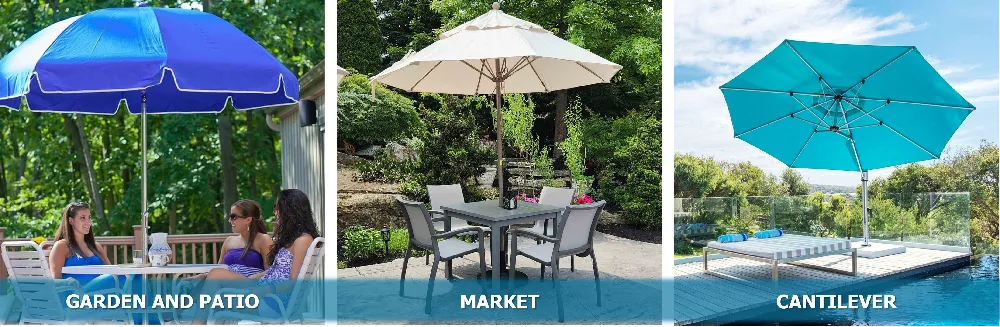
Commercial-grade umbrellas are generally characterized as three basic types: garden and patio, market and cantilever. At first glance, some of these commercial umbrellas may look similar, but it’s certain construction features and design details that distinguish them from one another. To understand their nuances, let’s take a closer look at the three umbrella types:
Garden and Patio Umbrellas
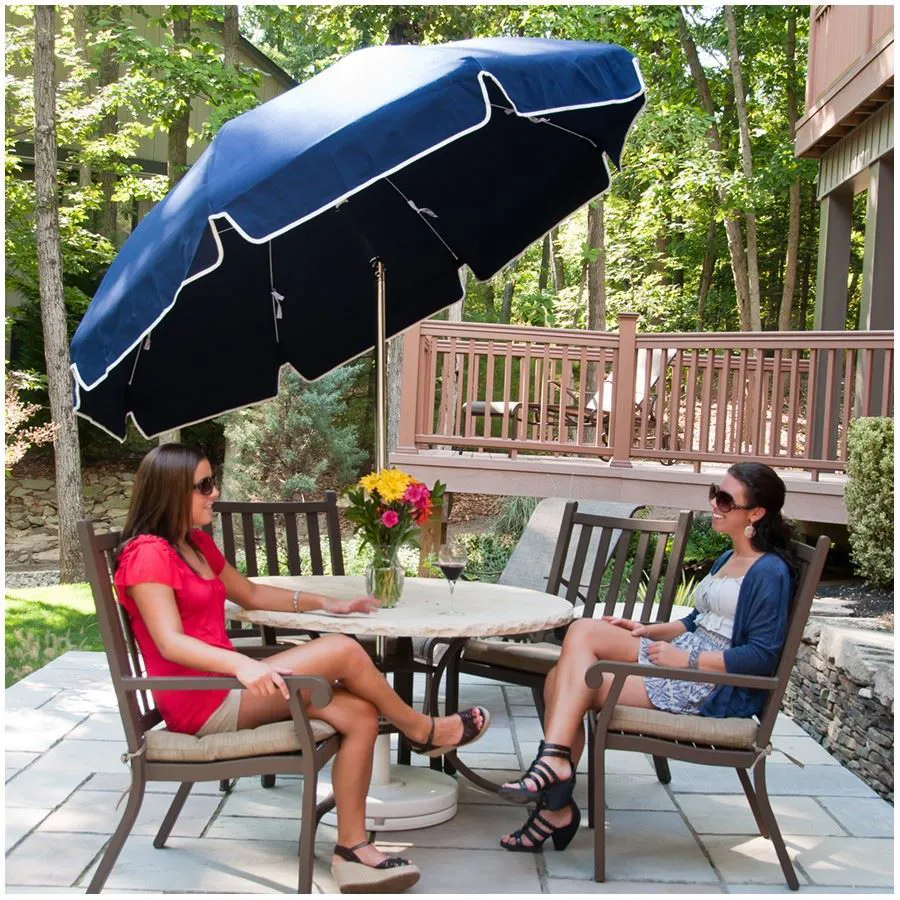
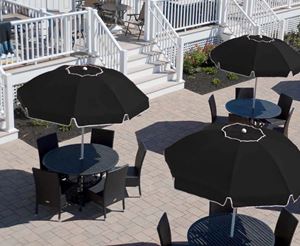
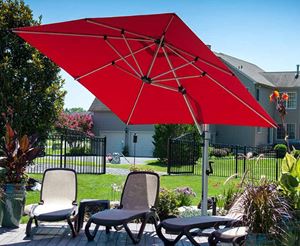
The first commercial umbrella type is called garden and patio umbrellas because they are designed for use in light commercial and residential spaces such as patios, decks, gardens, and pool areas. Featuring a shorter diameter size than other umbrella types, garden and patio umbrellas are meant to cover a small table or seating group. They are used as freestanding umbrellas with bases or they can be placed within a tabletop for shaded seating.
Garden and patio umbrellas can sometimes be mistaken for market umbrellas, so look for a couple of features to correctly identify these umbrellas. First, many garden and patio umbrellas have a valance or drape around the umbrella perimeter for added shade and decorative flair. The fabric itself is typically made of marine-grade acrylic or vinyl-coated weave, so it’s resilient. Secondly, most garden and patio umbrellas don’t offer a vented top for air circulation. The center poles – while still considered commercial grade – are typically made of lighter aluminum with fiberglass or steel ribs to house the canopy. With a lighter weight and lack of venting, garden and patio umbrellas are best suited for outdoor spaces that are protected from the wind. In terms of function, patio umbrellas are either opened manually or may come with a crank mechanism to lift the canopy. Additionally, some will include the ability to tilt the umbrella using a button on the pole.
Key features recap for garden and patio umbrellas:
- Smaller shade coverage: 6-1/2- to 7-1/2-foot diameter
- Attractive valance around umbrella perimeter for added shade and decorative flair
- Aluminum poles
- Fiberglass or steel ribs
- Canopy constructed of marine-grade acrylic or vinyl-coated weave
- Canopy shapes: Hexagonal and octagonal
- Tilt option with manual or crank lift to raise the umbrella
- Typically stabilized with a freestanding base
- Can be customized with a printed logo or branding
Garden and patio umbrellas are best suited forresidential or light commercial outdoor patios, gardens and pool areas where you want to add shade and style. These lightweight umbrellas are easier to move but can’t withstand constant exposure to harsh weather or windy conditions.
Market Umbrellas
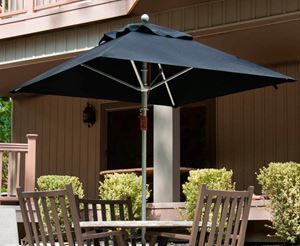
Designed specifically for commercial venues, market umbrellas are built with more durable materials, have larger canopies and feature fewer moving parts that can break. Providing greater shade and reliability, market umbrellas are the ideal choice for cafes, restaurants, and resorts. As with patio umbrellas, market umbrellas can also be used as freestanding units with a suitable base or integrated with dining tables and stabilized with a UBrace.
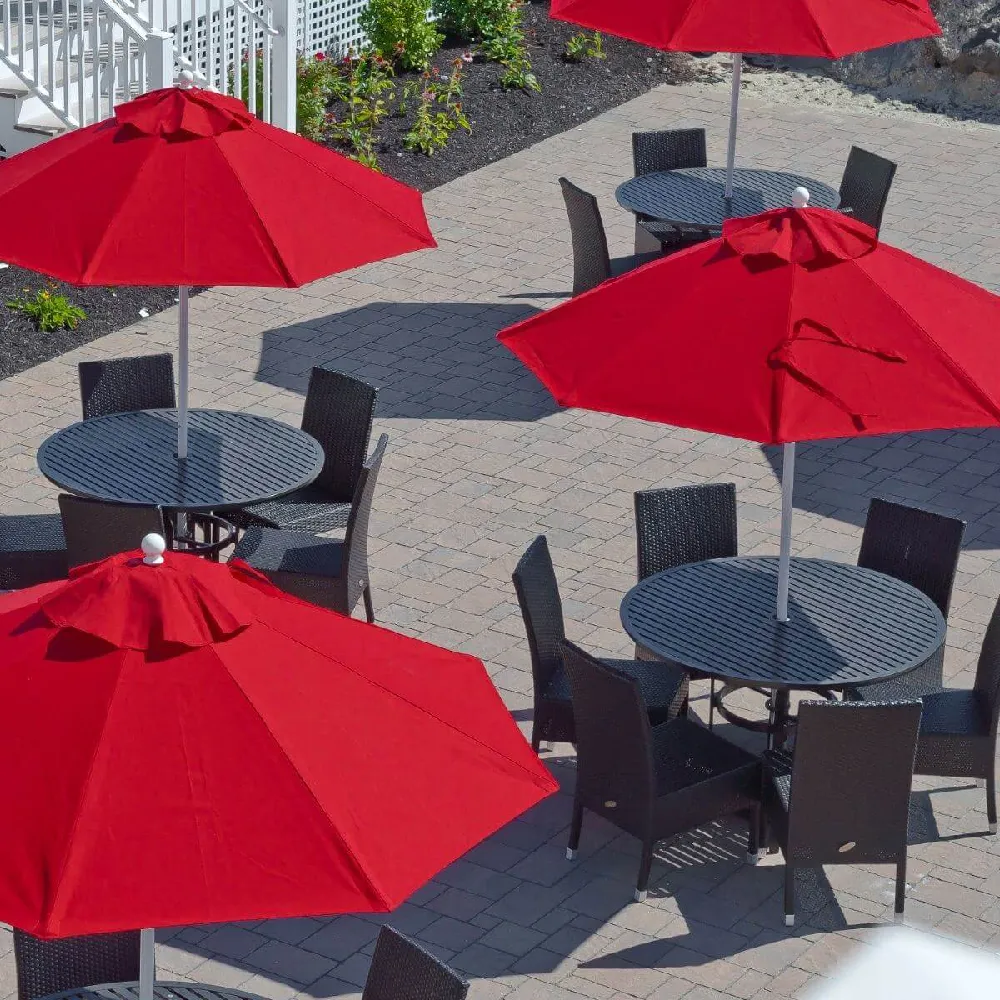
Market umbrellas come in a wider variety of canopy sizes to shade larger dining areas and multiple seats, offering sun protection to more guests. These larger umbrellas are stabilized with a heavy-duty pole made of either aluminum, natural wood or simulated wood. Market umbrellas are remarkably stable in windy conditions due to their vented canopies and reinforced ribs that hold the canopy in place. Typically, canopy ribs are made of aluminum or fiberglass, with both having their merits. Fiberglass ribs are resistant to sunlight, high winds, sea salt and rain, and they flex and bend with the pole to reduce breakage. Aluminum ribs also withstand all-day exposure to the sun and are easy to close when not in use.
Unlike garden and patio umbrellas, market umbrellas feature a variety of lift options. Some utilize a crank lift while others have a manual pulley and pin-locking system that requires pulling a rope to lift the umbrella and locking it into place with a metal pin. Other manual options include pushing the hub of the ribs up and locking it into position on the pole or using a pin to keep the hub in place.
All commercial umbrella canopies are made with high-quality fabrics, but market umbrellas – especially the larger ones – feature reinforced grommets and pockets to keep the umbrella fabric in place. Made of marine-grade acrylic, commercial umbrella fabric repels water and protects against fading, stretching and sagging.
Key features recap for market umbrellas:
- Larger shade coverage: 6-1/2- to 16-foot diameter
- Heavy-duty aluminum or wood poles
- Aluminum or fiberglass ribs
- Canopy constructed of marine-grade acrylic or solution-dyed acrylic
- Canopy shapes: Round, octagonal, rectangular, and square
- Typically vented for superior wind handling
- Multiple umbrella lift mechanisms: Crank, pulley and pin, or push and pin
- Many don’t offer a tilting canopy option
- Can be mounted in the ground or to a surface with a deck plate
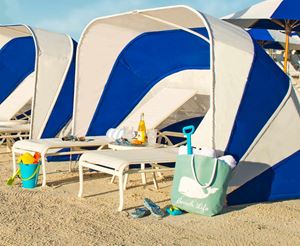
Market umbrellas are best suited forcommercial cafes and bistros as a dining table umbrella, poolside at resorts as chaise lounge shade, and city parks and gardens as a picnic table umbrella. A market umbrella with a wind vent, fiberglass ribs, and durable fabric canopy is guaranteed the best type of commercial umbrella you can buy.
Cantilever Umbrellas
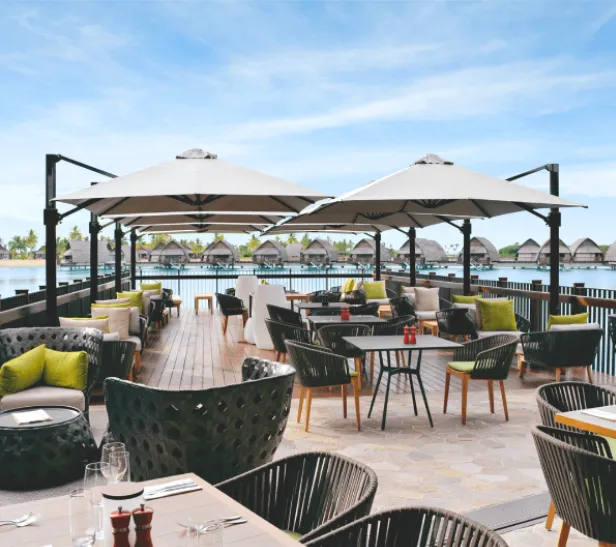
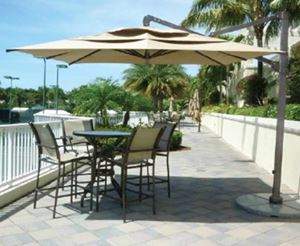
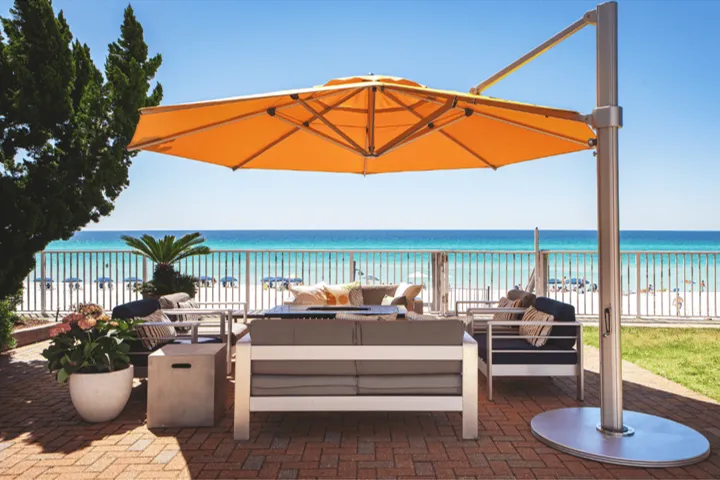
The third commercial umbrella type, cantilever umbrellas, is different from market and patio umbrellas in that cantilevers have an offset design, meaning the base support that holds up the umbrella is not directly under the umbrella canopy but off to the side. This special offset design promises maximum shade coverage without sacrificing seating space. In addition to providing more shaded seating without a cumbersome pole in the way, cantilevers make it easier to shade multiple seating spots like sectionals and daybeds. Another unique feature of many cantilever umbrellas is their ability to be rotated 360 degrees and tilted front to back or side to side so that guests enjoy shade throughout the day.
Because of the off-center location of the umbrella, cantilevers need significantly more base weight than comparable center-pole umbrellas. To create better stability, bases weighing anywhere from 400 to 800 pounds can be used. Commercial cantilever umbrellas are made with the most durable materials on the market, so every part of the umbrella – from the more substantial pole and thick, fiberglass ribs to the sophisticated crank lift – is built to last.
Key features recap for cantilever umbrellas:
- Larger shade coverage: 10- to 13-foot diameter
- 360-degree mast rotation and canopy tilt options
- Heavy-duty aluminum poles
- Aluminum or fiberglass ribs
- Canopies constructed of marine-grade acrylic in octagonal and square designs
- Smooth crank lift systems
- Some models include wind stabilizer kits for added security
- Optional protective storage covers
- Can be mounted in the ground, to a surface with a deck plate, or installed on a weighted base
Cantilever umbrellas are best suited forpremium outdoor seating spaces and mixed lounge areas where a center pole would be in the way. If you’re looking for an umbrella that delivers constant shade and high-end visual impact, cantilever umbrellas are for you.
COMMERCIAL UMBRELLAS WILL HAVE YOU MADE IN THE SHADE
We hope this breakdown of commercial umbrella types helps make your purchasing decision easier. As an additional resource, check out our handy commercial umbrella chart that provides more insight about umbrella types, frames, sizes, and more.
When shopping for commercial umbrellas, remember that while some umbrellas may look the same, they could serve different purposes, so don’t choose one simply by look, size, or price. Take the time to read the product descriptions, features, and specifications so you know exactly what you’re getting. You don’t want to make the mistake of buying a patio umbrella when your outdoor space requires a more durable and wind-resistant market umbrella. Also, keep in mind who will be using your umbrellas and choose a product that not only serves them well but also makes a great impression.
Leave your comment